Friday, July 9, 2010

From "Edit then Publish" to "Publish then Edit"


As a journalism major and an avid reader, I have been trained to edit, edit, edit and then publish. It must be perfect before going to print. That's why Clay Shirky's chapter on "publish and then edit" is particularly intriguing to me. It is such a shift in my thinking that it goes beyond me just saying that it's wrong. To me, this concept is so "out there" that I really have to stop and ponder how that could even work.


Then I thought about our confirmation class this past year. Our Youth Director separated the 9th graders from the younger students to give them the opportunity to discuss/explore their own relationship with God. One of the underlying goals was to give them the chance to express their doubts and their questions in a safe environment. It really was giving them a chance to "publish" their theology by giving them a place to lay it out (verbally), and then through discussion, to hone in on what they believe, what they question and what their doubts were. It was an interesting process -- frustrating at times -- but an important one.


I have met several people throughout my two years at my current church who were completely turned off by religion because they had serious questions about their faith when they were in confirmation. Those questions were either blown-off by the pastor or the students were too afraid to voice them.


So how can we be more open to "publish" first in our churches and "filter" later as people work out their faith questions? This confirmation class was one experiment. What is happening in your churches to allow people to talk out/work out their faith?

Tuesday, July 6, 2010

Cake is to Encyclopedia AS Love is to Money?


"We are used to a world where little things happen for love and big things happen for money. Love motivates people to bake a cake and money motivates people to make an encyclopedia. Now, though, we can do big things for love."
~Clay Shirky, Here Comes Everybody (p. 104)

Technology is changing our ecology, according to Clay Shirky. These are not just little changes in our world. The changes from technology are incredibly pervasive and deep. One of the biggest changes is in what motivates people to do things. As quoted above, Shirky says that big things used to happen for money. As the world of technology changes and changes us, what does our world look like if we now do big things for love instead? Does this get us closer to the kingdom of God here on earth?


Tuesday, June 29, 2010

Community

Community -- Definitions from Free Online Dictionary
1. a. A group of people living in the same locality and under the same government.
b. The district or locality in which such a group lives.

2. a. A group of people having common interests: the scientific community; the international
business community.
b. A group viewed as forming a distinct segment of society: the gay community; the
community of color.

3. a. Similarity or identity: a community of interests.
b. Sharing, participation, and fellowship.

I was re-watching the Michael Wesch video "An Anthropological Introduction to YouTube." In it, Wesch says that YouTube is really "a story about new forms of expression and new forms of community and new forms of identity." This got me thinking about how 'community' is changing -- not just within YouTube, but in the world today.

I found this definition of community on Free Online Dictionary. Feel free to look it up yourself, if you want to. The first definition (and usually the most common one) is:

1. a. A group of people living in the same locality and under the same government.
b. The district or locality in which such a group lives.


To be honest, this only applies to a very small group of people who are directly involved in my life. Sure, there are quite a few people who live in my town and even in my county, but there are so many more people who affect my life on a daily basis who live outside of that area.

The second definition is:

2. a. A group of people having common interests: the scientific community; the international
business community.
b. A group viewed as forming a distinct segment of society: the gay community; the
community of color.


Again, some of the people in my world would fit into this category. All the students and faculty and alumni at Luther are part of the Luther Community. And I do hang out with a bunch of Lutherans so that would be an over-arching community in my life. But it doesn't truly describe most of the people who love and care about my life.

Finally, the third definition is:

3. a. Similarity or identity: a community of interests.
b. Sharing, participation, and fellowship.

Again, 3a doesn't truly define my most significant community. So we turn to the very last definition which I think should be the new first definition. This is the new way we view community.

I am an online seminarian with classmates all over the United States. We have diffierent interests and different family and work situations, and we definitely do not live in the same district or locality. But with these classmates, the most important part of our community is our sharing, our participation with each other and our fellowship.

From Michael Wesch's video about YouTube, I am seeing that my classmates and I are not alone in this thought. There are random groups of people all over the internet who share, participate and have fellowship through this incredible medium.

So what does this mean for our churches when community is not even defined the way it was 10 or 15 years ago? It changes us. It changes what it means when we read the Bible. For example in the gospel lesson for July 11, the lawyer asks Jesus, "Who is my neighbor?" Good question. Who is our neighbor? If our community can be worldwide at the touch of a button, who is our neighbor?

I love what I am learning about technology in this class, but it is sure making me think about things differently!
Saturday, June 26, 2010

Common Ground


My parents are techy for their age. My mom is on Facebook. They can e-mail, and they have an iPod touch for checking weather, sports scores and newspaper stories. My in-laws just got their first computer. Even thought they are from the same generation, there was a big gap between them. When I would leave for classes at seminary, I would have to type up the schedule for my kids and print it out for my father-in-law since he's my backup kid-runner. Now that he has a computer, I just e-mail him the schedule and he has it. I posted a video of my son at his last guitar jam, and I was able to share it with all the grandparents. We all now have that common media language and can talk on common ground.

This summer I am taking three classes -- Christology, Aging in Ministry and this Media in Christian Education class. This cartoon made them all come together. As I was reading for my Aging final paper, the article was talking about how quickly the world is changing now. Only 100 years ago, each generation could generally understand the previous generation and what they had lived through. Today, however, life changes so fast that the gap from generation to generation is larger than ever. Seeing the gap between my fairly-techy parents and my newly-techy in-laws makes me think that with technology the gap between the old and the young could be even wider than ever.

Given these fast-growing gaps, where do we find the common ground to allow us to be a Christian community? How can we understand each other when the gaps are so large? In Mary Hess's book Engaging Technology in Theological Education, she reminds us that when working with technology, we need to ask "How is God revealing Godself within this medium, and how are we opening ourselves up to that revelation or blinding ourselves to its possibility?" (p. 31)

I also think these same questions can be asked to help us bridge the gaps in our Christian communities. We can ask these questions about anyone who is on the other side of the gap from us. How is God revealing Godself within that person? How are we opening ourselves up to that revelation or are we blinding ourselves to its possibility? By finding how God is working on the other side of the gap, we can find that common ground and strengthen our Christian community.

Wednesday, June 23, 2010


My learning goal for this class is to explore some ways that media and technology can be used to encourage learning communities. This fits under goal 1e familiar with a variety of ways of supporting, facilitating and trouble-shooting learning communities.


This past year, my partner pastor and I led a group on a Walk Through the New Testament where we had a group of people reading New Testament texts daily from January through the end of May. If they followed the plan, they would have read the entire New Testament in that timeframe. As we led the class, we found that we needed several ways of including people in the process. As a result, we had a Facebook page, we put the handouts on the church webpage, we met face-to-face every other week for question-and-answer, and we participated in the online webcast of Dr. Matthew Skinner’s Walk Through the New Testament class. Different members took part in the different learning communities, and some members chose to just follow the plan on their own without any outside support from us.


I would like to explore the how technology can open up new ways for the members to engage in learning communities in the church.

Saturday, June 12, 2010

Cool blogs!

Hey, class!

Here are a couple of blogs that I read that are pretty cool. The first is for those of us who are visual learners called Visual Theology.

The other is for those who like writers who are a little different called Unorthodoxology.

Enjoy!

Friday, June 11, 2010

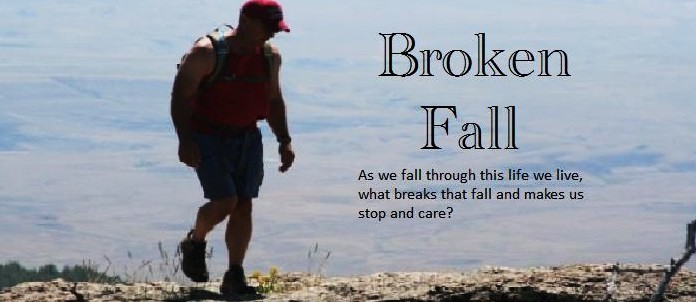
Broken Fall


We can go through this life in many ways. Some of us are more cautious -- watching and observing and checking things out before jumping in. Some of us jump first and then check things out later. Some of us are somewhere on a scale that ranges from one end to the other. But no matter what, we're all trying to figure our way through without the benefit of previous experience. There are no "do overs." It's just this one life that we are falling through. Maybe a little like Alice in Wonderland when she falls into the hole under the big tree. We don't really know what's coming at us or when we might land or where. For me, that fall is sometimes scary, sometimes exciting, sometimes confusing, and sometimes painful. The only thing that can break my fall is God. God's saving grace is what breaks my fall through this otherwise crazy world, and keeps me from crashing. God is always at work in my life, but often I don't remember to look for it.